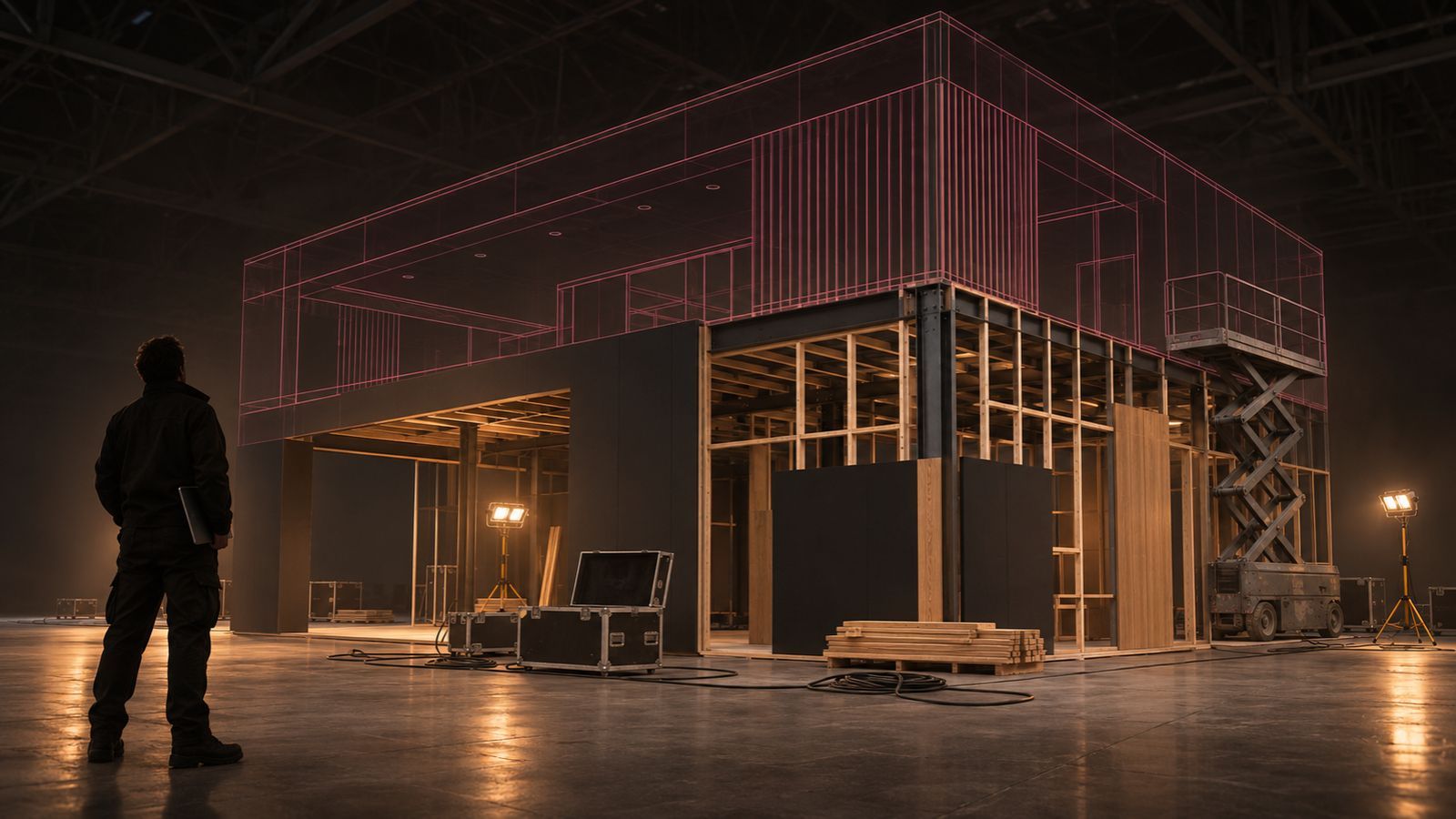
Your AI stand concept can't be built as drawn. What happens next
Tom Stevens • 3 November 2026
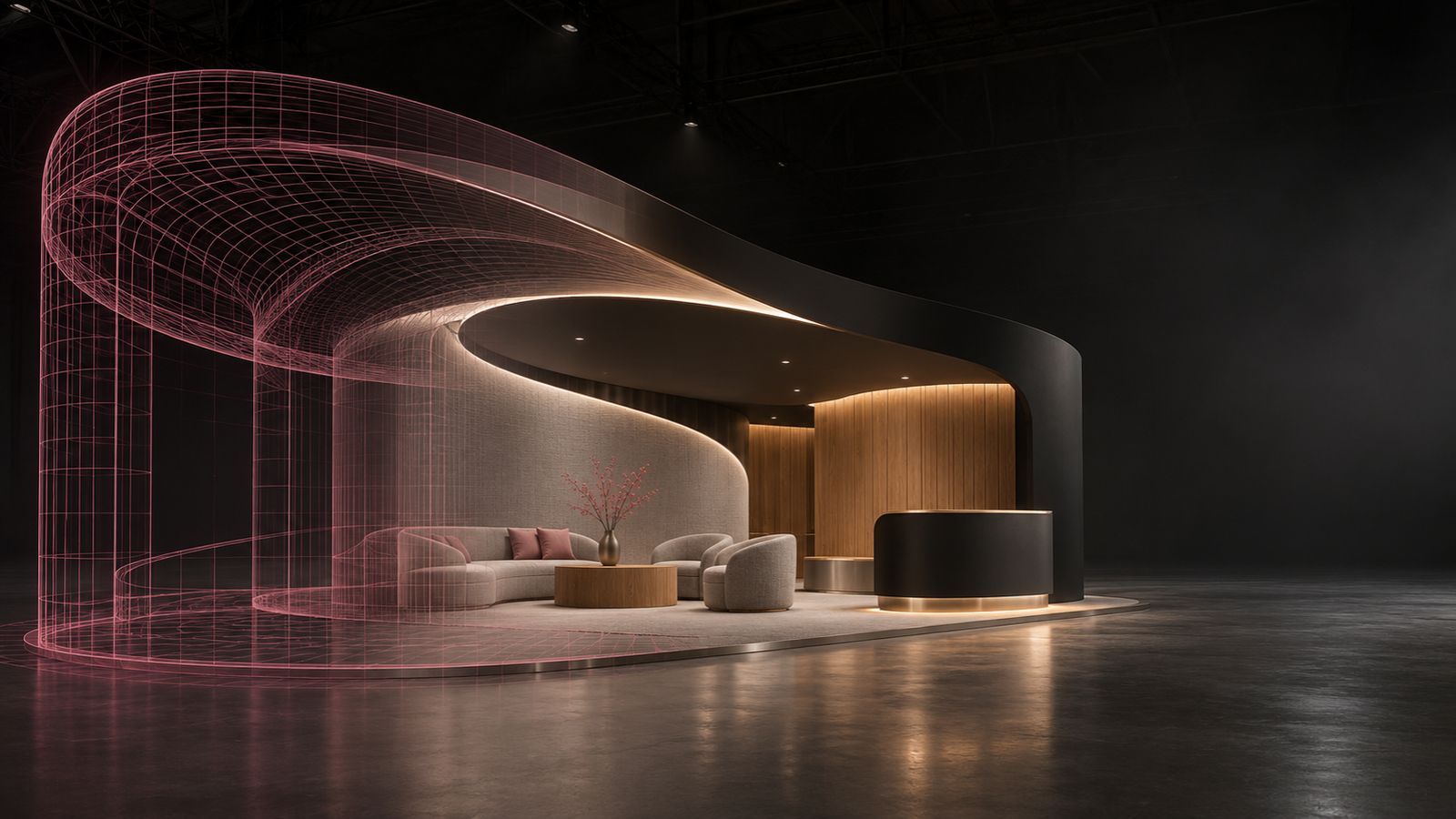
AI can draw a stand in minutes. Here's how to keep the idea when the venue, the structure and the materials say no.

More and more briefs now arrive with a picture attached. Someone in the marketing team has spent an evening with an AI image tool, and the result is genuinely exciting: a sweeping canopy, a glowing floor, a stand that looks like nothing else in the hall.
We think that's a good thing. We use AI in our own creative process to explore more directions early, and a client who arrives with a visual has already done the hardest part of a brief: deciding what they want people to feel.
The problem comes later. As Wendi Jacobs of Acer Exhibits & Events pointed out at an industry panel in 2026, AI-generated booth images often ignore structural limits, show rules and venue requirements, and designers end up explaining why a concept can't be built (Exhibit City News). So what do you do when you love the picture and it won't work?
Separate the idea from the image
An AI render is a mood, not a plan. Before anyone asks whether it can be built, it's worth asking what it is about the picture that matters. Usually it comes down to two or three things: a feeling of openness, a dramatic overhead feature, a material, a colour, the way light falls. Those are the parts to protect. The exact geometry in the image almost never is.
Write them down. "We want it to feel open and calm, with one striking feature overhead" is a brief a designer can work with. A render on its own is a picture to copy, and copying it is where things go wrong.
Check it against the hall, not the screen
AI tools don't know which hall you're in. Every venue has rules that shape what's possible, and they change from show to show. The usual ones to check:
- Height limits. Most halls cap how high a stand can go, and the cap may differ for walls, overhead features and rigging.
- Rigging. That floating canopy needs hanging points in the hall roof, and permission to use them.
- Open sides. Many shows limit how much of a stand's edge can be closed off, to keep the hall open.
- Two-storey stands. These need structural sign-off and often extra approvals, and some halls don't allow them at all.
- Fire and safety. Materials, exits and enclosed spaces all have rules a render ignores.
None of this kills a good idea. It changes how the idea is delivered.
Engineer it, then design it again
This is where an experienced team earns its place. The structure has to stand up, ship, and go together in the hours a build allows. Glowing floors become specified products with power supplies. Curves become materials that can actually be shaped and transported. The result should still feel like the picture you fell in love with, while working in the space you've booked.
Know what the render leaves out
AI images are very good at the look of a stand and silent on how it works. They rarely show where the storage goes, how visitors move through the space, where a private meeting happens or how the team will run a demo when twelve people are watching. A stand has to do all of those things. A good designer will add them without losing what made the concept special.
Use AI for what it's good at
AI is excellent for exploring options quickly and getting a feeling onto the table early. Used that way, it makes the brief clearer and the first meeting more productive. It's much less useful as the final design. The best results come from treating the AI image as the start of the conversation, then handing it to people who know how stands get built.
The Oaken take
Bring us the picture. We'll tell you honestly what will work as drawn, what needs to change, and how to keep the parts that matter. Then we'll build it.
Got a concept you want to see built? Send it over. Make it real.
FAQs
Can AI design an exhibition stand?
AI can produce concept images quickly and is useful for exploring ideas. It doesn't account for venue rules, structure, materials or how visitors use the space, so a designer still needs to turn the concept into something buildable.
Will a stand builder work from my AI render?
A good design agency will. The render is a useful starting point for the brief. Expect the design to change in places to meet venue rules and structural needs, while keeping the look and feel you liked.
What are the most common reasons a stand concept can't be built? Height limits, rigging restrictions, rules on open sides, two-storey approvals, and fire and safety requirements. Each varies by venue, which is why concepts need checking against the specific hall.
Got a stand that needs to work this hard?
Keep reading